
Plasma Treatment Specific Applications
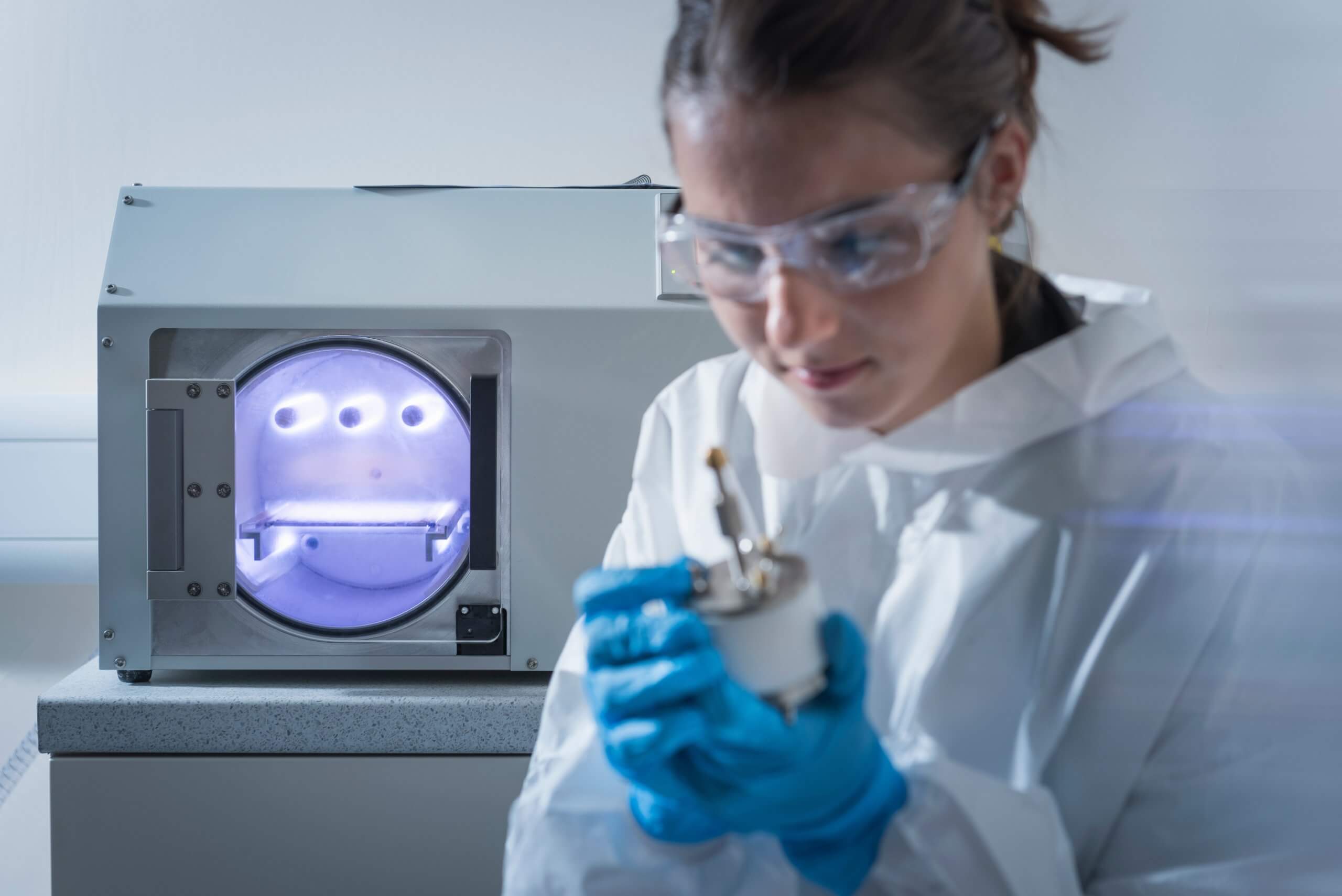
Plasma treatment cleans, etches and functionalizes plastic and metal surfaces to improve adhesion. Plasma diagnostics are tools used to characterize and optimize the processes for plasma treatment applications. By analyzing plasma parameters, these diagnostics enable improved surface properties, ensuring that treatments are effective, efficient, and consistent across various materials and applications. The examples below highlight many applications where plasma treatment is used to improve throughput and product quality.
Surface Cleaning
Remove contaminants and prepare surfaces for further processing. For example, cleaning of copper and stainless-steel layer components of PCBs before photoresist coatings. It removes organic contaminants, oxides, and oils, ensuring better adhesion of solder or other coatings.
Role of Plasma Diagnostics:
Monitoring plasma effectiveness is essential to ensure thorough cleaning and prepare surfaces for the next steps.
Surface Modification
Alter surface properties like wettability, roughness, and chemical functionality. Plasma treatment increases the surface energy of materials, making them more hydrophilic (water-attracting) or hydrophobic (water-repelling) depending on the process. This modification can improve the material's ability to bond with adhesives, inks, or coatings. Plasma treatment can also activate the surface of materials by introducing reactive species such as oxygen, nitrogen, or hydrogen onto the surface. This can promote chemical bonding or functionalization.
Role of Plasma Diagnostics:
Real-time feedback on the effects of plasma conditions helps achieve desired modifications.
Surface Coating and Deposition
Plasma treatment can be used for the deposition of high-quality thin films or coatings on various substrates. Plasma treatments, such as plasma nitriding or plasma polymerization, can improve the hardness, wear resistance, and corrosion resistance of materials by forming hard coatings or altering the microstructure of the surface. Main applications include semiconductor and solar industries for thin-film deposition and aerospace and automotive industries for anti-corrosion or wear-resistant coatings.
Role of Plasma Diagnostics:
Continuous monitoring ensures control over deposition rates and film characteristics.
Biomedical Applications
Plasma treatment can be used to sterilize medical devices or materials by deactivating microorganisms, viruses, and bacteria. Plasma can be used to modify both synthetic and natural polymers to improve their properties, such as biocompatibility, hydrophilicity, surface charge, or mechanical strength. This is particularly important in the fabrication of bioresorbable materials, scaffolds, and various biomedical devices.
Role of Plasma Diagnostics:
Ensures effective plasma treatment for devices, improving safety and efficacy in medical settings.
Impedans solutions for plasma treatment specific applications:
Plasma treatment is a powerful and versatile technology for surface modification, offering a range of benefits like improved adhesion, wettability, cleaning, and coating deposition. However, challenges like material compatibility, process control, and equipment costs need to be addressed for broader industrial adoption. Impedans technologyoffers a range of various plasma monitoring tools enabling process optimization, and control to expand the range of plasma treatment applications.


Impedans Langmuir probes
Impedans Langmuir probes can be used to optimize plasma processes by providing real-time data on plasma parameters such as electron density, temperature and plasma potentials. This helps in adjusting parameters like gas flow, power, and pressure to enhance process efficiency.
Impedans Semion RFEAs
Impedans Semion RFEAs can assist in process optimization through measurements of ion flux and energies at the surfaces. The Semion Multi Sensor system can have up to 13 sensing elements distributed around the imitation substrate, which is primarily used to investigate the uniformity of ion energy and ion flux at the substrate. Precise control over ion flux distribution helps in reducing variability and achieving consistent profiles across the large size substrates.
Impedans Octiv VI
Impedans Octiv VI Probes measure key RF parameters of plasma systems, including current, voltage, phase, and impedance. Real-time monitoring of these parameters with the Octiv VI probes enables process optimization and control, leading to improved performance and increased productivity. Additionally, tracking the changes in harmonic signals emitted from the plasma with the Moduli RF Spectrometer helps identify process drifts and variations, allowing for timely preventive actions to maintain system stability and efficiency.
