Plasma Thrusters
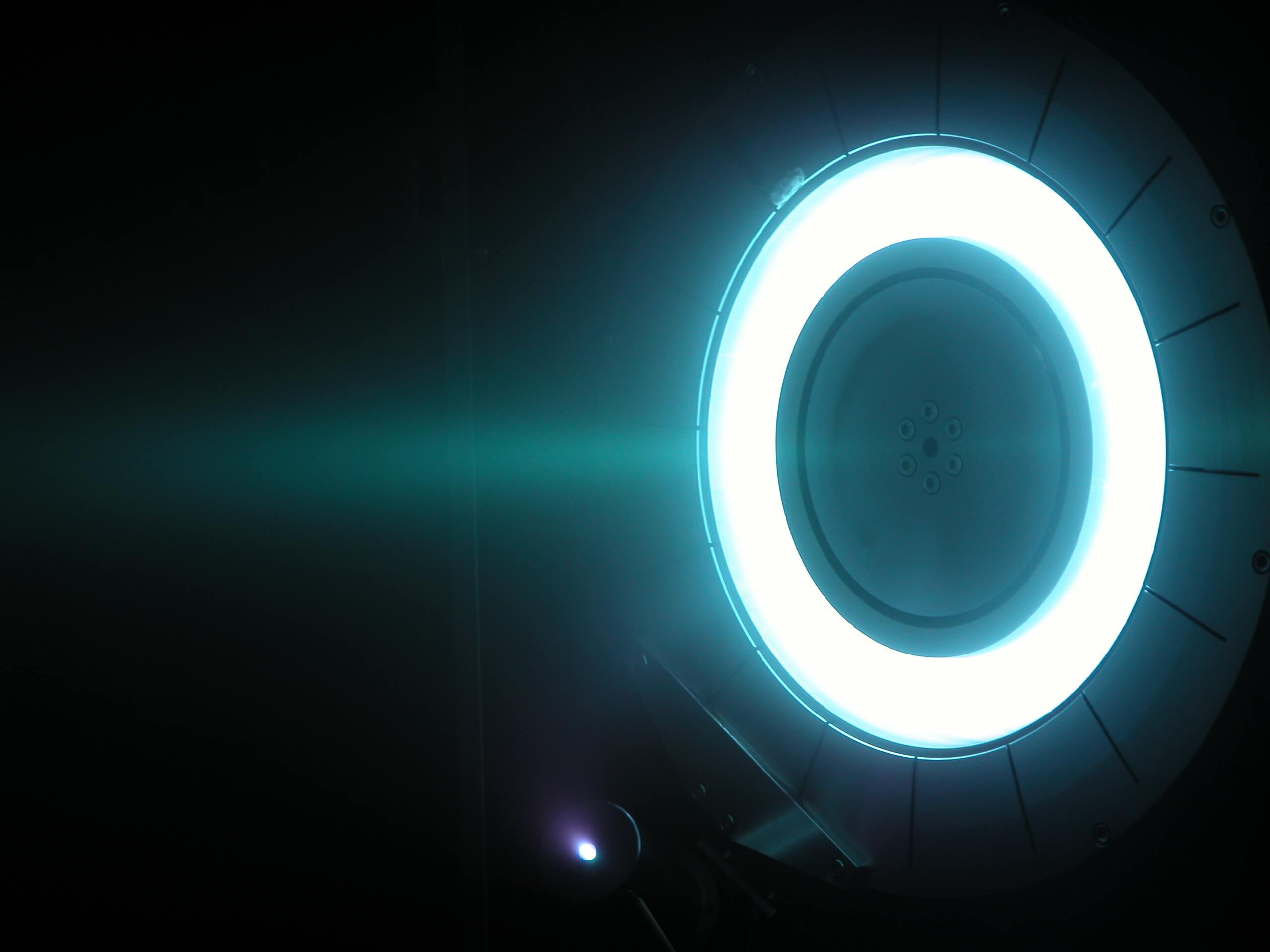
Plasma thrusters, used in space propulsion systems, rely on ionized gases (plasma) to generate thrust. Due to extreme temperature and high velocity of plasma particles, direct thrust measurement is a challenging task. Accurate diagnostics of these plasmas are essential for understanding and optimizing thruster performance. Below are some of the key challenges and potential solutions.
Plasma Plume Characterization
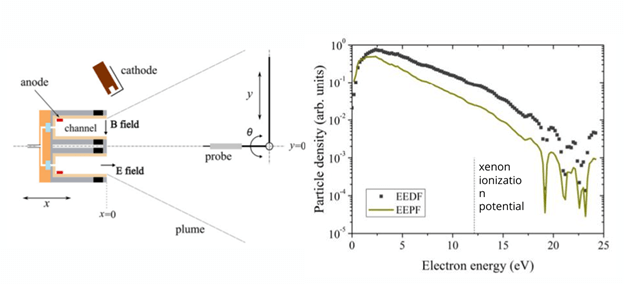
Analysis of plasma plumes is difficult for thrusters, due to the complexity and number of phenomena taking place in the plume formation and downstream expansion. However, spatial, angular and temporal measurements of important plasma parameters such as electron/ ion density, electron temperature and EEDFS are helpful to gain insights into the plasma dynamics of plume and its expansion.
Impedans Langmuir probe for plasma plume characterization in thrusters
Impedans offers Langmuir probe tool to study the plasma plumes generated by plasma thrusters. It allows for the measurement of key plasma characteristics such as electron temperature, plasma density, and plasma potential. Langmuir probes are inserted into the exhaust plasma plume to measure the density and temperature of the electrons. This helps in determining ionization efficiency and optimizing the electromagnetic or electrostatic acceleration of ions. The probe is also used to study the sheath dynamics and plasma potential in the near-exit region of the thruster, which is crucial for reducing erosion and improving the thruster’s lifetime. Impedans Langmuir Probes use automated probe systems that can move through the plasma using a linear drive, capturing data at various points and reconstructing the gradient profiles along the expansion axis of plume.
Electrical characterization of thruster
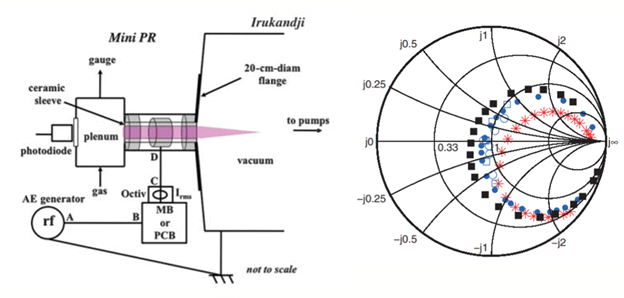
Knowledge of plasma impedance and power consumption across various operational regimes is important in assessing the efficiency of energy transfer to the plasma and in optimizing the power supply to the thruster.
Impedans Octiv V-I probe for electrical characterization of thrusters:
The Octiv VI probe from Impedans is used to measure the I-V characteristics of the plasma, allowing for determination of plasma impedance and power consumption. Additionally, VI probes can monitor plasma stability, detecting oscillations or irregularities that could affect thruster performance and longevity.
Thrust Measurements
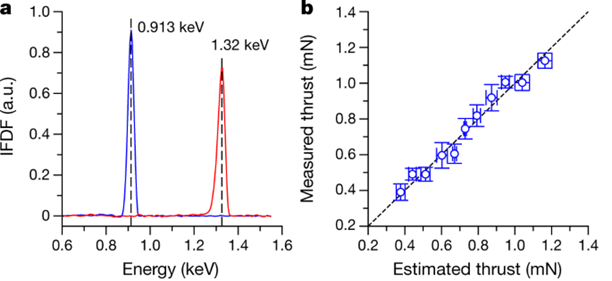
Thrust measurement in plasma thrusters is challenging but the knowledge of velocity and energy of ions expelled from the thruster can be helpful as they directly relate to the efficiency of the propulsion system and indirect thrust estimation can be possible. Understanding the ion energy helps in analyzing and controlling ion acceleration processes within the thruster, aiding in minimizing power losses and optimizing thrust-to-power ratios.
Impedans Semion RFEA for ion energy and thrust measurement in thrusters
Impedansprovides Semion Retarding Field Ion Energy Analyser (RFEA) technology designed to precisely measure ion energy, velocity and flux in the plume of thrusters. Semion is placed in the plasma plume to measure the ion energy distribution function. This is crucial for determining the thruster’s specific impulse and thrust efficiency. Semion pDC is advanced RFEA system capable of time resolved measurements that can capture dynamic ion behavior in fast-moving plasma flows.