
Process End Point Detection
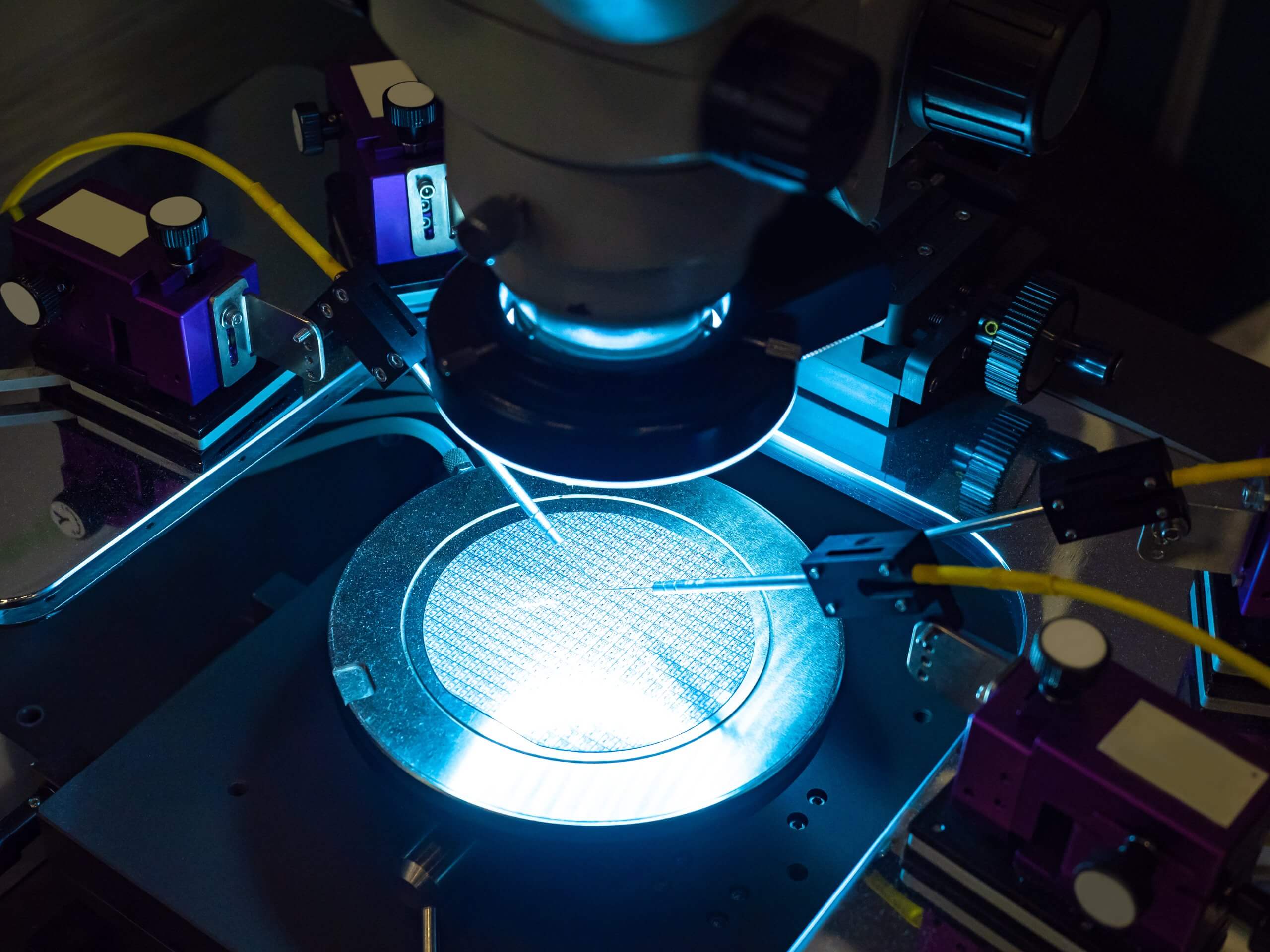
End point detection refers to the process of identifying the precise moment when a specific manufacturing step reaches its completion. This is particularly crucial in semiconductor fabrication processes, where even the slightest deviation from the desired endpoint can have significant implications on the final product’s performance and reliability. Achieving reliable end point detection poses several challenges. Variations in material properties, process conditions, and equipment performance can all introduce uncertainties that complicate the detection process. The challenges and solution for End Point Detection on a variety of processes, are discussed below.
<1 Open Area Etch End Point
When patterns are etched on a wafer, the in-line control of etching progress is vital to avoid over and under-etch, ensure optimized process parameters, high yield, and productivity. Precise endpoint detection (EPD) during the plasma etch process is a crucial element.
Impedans solutions for small open area etch end point detection:
The Moduli RF Spectrometer is a non- invasive solution for end point detection. It measures RF harmonics emissions from plasma being installed on an RF leaking window or port. The harmonics are often very sensitive since they react non- linearly with changes in plasma impedance during the etch process. As the etching progresses and the endpoint is approached, the composition of the plasma changes, resulting in characteristic shifts in the RF emissions. By monitoring these changes, the endpoint can be detected. RF spectroscopy technique has been found to exhibit superior sensitivity than OES enabling it to be used in complex processing scenarios such as those with less than 1% open area.
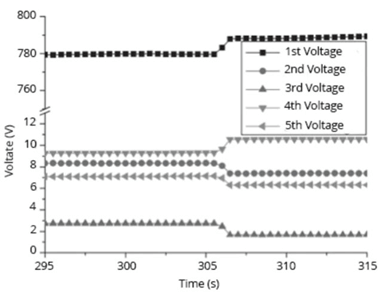
Deposition chambers usually go through a cycle of chamber wall seasoning, wafer processing and chamber cleaning. Incomplete cleaning can cause cross contamination between different plasma recipes, and it can interfere with the seasoning, a major cause of chamber arcs and particle creation.
Impedans solutions for clean end point detection:
Monitoring the RF harmonics reveals the change in plasma state (and thus chamber condition) between the start and end of the clean process on a deposition tool.
Inline Octiv VI Probe
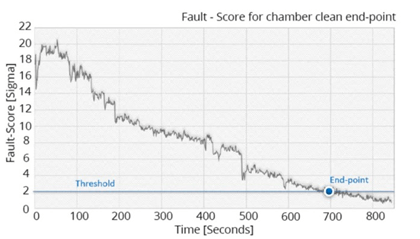
With an Octiv Suite VI probe after the matchbox, it is typically very easy to determine the endpoint for clean processes by measuring the plasma harmonics. A baseline for the plasma cleaning recipe was collected by running the clean process when the chamber was already clean. By doing a statistical comparison between the live data and the baseline data, a clear endpoint signal can be defined. In the example figure 2, a 2 Sigma difference from an ideally clean chamber is considered sufficient to stop the process. The advantage of the statistical method is that the same setpoint can be applied for every recipe on every chamber, without needing to set upper and lower windows on individual harmonic channels.
Proximity installed Moduli RF spectrometer
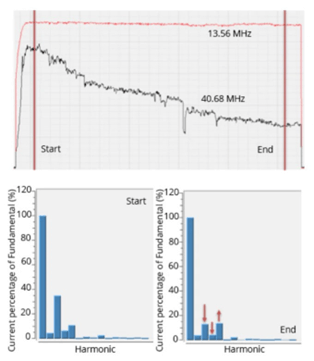
Moduli RF spectrometer measures the RF emission from plasma captured through a proximity window. These are very useful particularly for the processes where dielectrics are deposited, and the window becomes opaque to the optical emission limiting the use of OES. See figure 3 for an example of endpoint detection on a PECVD plasma chamber with completely coated optical windows. The signal level from the fundamental frequency (13.56 MHz) did not change from start to end. However, several of the harmonics showed a steady change during the process, until they started to saturate, indicating that the cleaning was complete.


Plasma ashing refers to a plasma mediated etching process by which photoresist and post etch residues are stripped or removed from a substrate upon exposure to the plasma. Oxygen plasma is mainly used to remove the photoresists during the process. As the process continues, byproducts like COx, H2O will be generated inside the plasma chamber. Those by-products will change the plasma state.
Impedans solutions for ashing end point detection
Monitoring the RF harmonics reveals the change in plasma state (and thus chamber condition) between the start and end of the ashing process. Octiv VI probe and Moduli RF spectrometer can be used to detect the end points for ashing process.
